
Introduction
An ankle sprain is one of the most common musculoskeletal injuries affecting people of all ages. Whether you are an athlete, a fitness enthusiast, or someone who simply misstepped while walking, an ankle sprain can significantly impact your daily activities and quality of life.
Many people assume that ankle injuries will heal on their own with enough rest. While mild cases may improve over time, inadequate treatment can lead to chronic pain, instability, recurring injuries, and reduced mobility. This is why proper rehabilitation is essential for a complete recovery.
Physiotherapy plays a crucial role in helping patients recover from the pain safely and effectively. Through targeted exercises, manual therapy, and rehabilitation techniques, physiotherapy not only reduces pain but also restores strength, balance, and function.
In this article, we will explore everything you need to know about an ankle pain and discuss seven proven physiotherapy treatments that can help you recover faster and prevent future injuries.
What Is an Ankle Sprain?
An ankle sprain is a common injury that occurs when the ligaments supporting the ankle joint are stretched, partially torn, or completely torn beyond their normal range of motion. Ligaments are strong bands of connective tissue that connect bones to one another and play a crucial role in stabilizing joints during movement. In the ankle, these ligaments help maintain proper alignment of the joint and prevent excessive movement that could lead to injury.
An ankle sprain typically happens when the foot suddenly rolls, twists, or turns in an unnatural direction. This sudden movement places excessive stress on the ligaments, causing damage to the soft tissues surrounding the ankle joint. Depending on the severity of the injury, the damage may range from mild stretching of the ligament fibers to complete ligament rupture.
The most common type of ankle sprain is an inversion sprain, which occurs when the foot rolls inward. This movement places excessive strain on the ligaments located on the outer (lateral) side of the ankle, particularly the anterior talofibular ligament (ATFL), which is the ligament most frequently injured during the pain. Inversion sprains account for approximately 80–90% of all this pain injuries.
Less commonly, an eversion sprain may occur when the foot rolls outward, damaging the ligaments on the inner side of the ankle. Although eversion sprains are less frequent, they can sometimes be more severe due to the strength of the ligaments involved. Another type of injury known as a high ankle sprain affects the ligaments that connect the tibia and fibula above the ankle joint. High ankle sprains are often seen in athletes involved in contact sports and may require a longer recovery period.
This kind of pain can occur during sports activities, exercise, work-related tasks, or even routine daily movements. Simple actions such as stepping on an uneven surface, missing a step while walking downstairs, slipping on a wet floor, or landing awkwardly after a jump can be enough to cause the pain. The risk is even greater when participating in activities that involve rapid changes in direction, jumping, pivoting, or sudden acceleration and deceleration.
Although this kind of pain can happen to anyone, it is particularly common among athletes involved in sports such as football, basketball, badminton, volleyball, tennis, and running. These sports place significant demands on the ankle joint due to frequent cutting movements, jumping, landing, and quick directional changes. However, ankle sprains are not limited to athletes. Children, adults, and older individuals can also experience ankle sprains during everyday activities.
The symptoms of an ankle sprain may vary depending on the severity of the injury. Common symptoms include pain around the ankle, swelling, bruising, tenderness when touching the affected area, difficulty bearing weight, reduced range of motion, and feelings of instability when walking. In more severe cases, patients may hear or feel a popping sensation at the time of injury, followed by significant swelling and difficulty walking.
Healthcare professionals typically classify ligament injuries of the ankle into three grades based on the extent of tissue damage and the symptoms experienced by the patient.
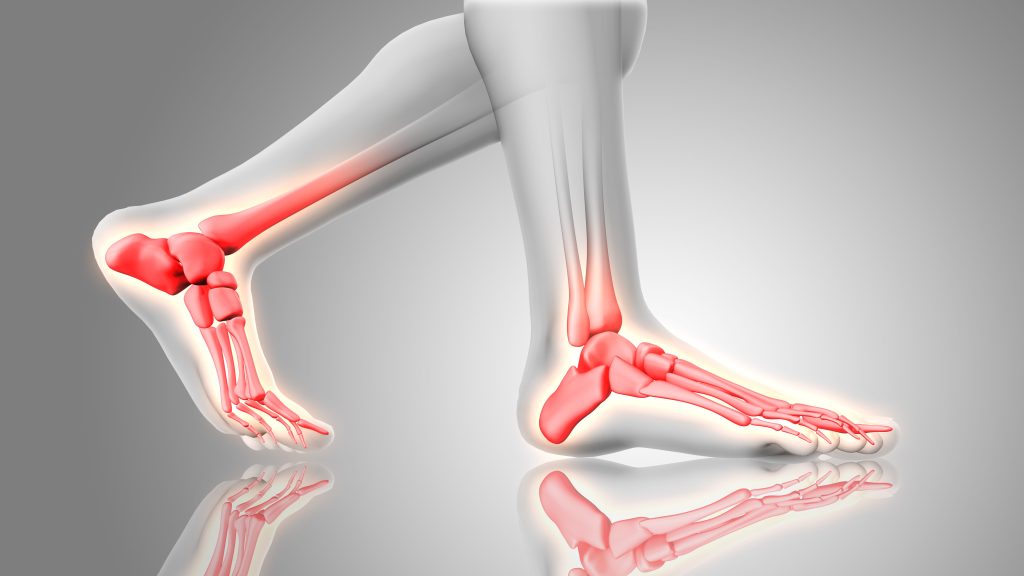
Grade 1 (Mild Injury)
A Grade 1 injury involves mild stretching of the ligament fibers without significant tearing. Symptoms are generally mild and may include slight pain, minimal swelling, and little to no loss of function. Most individuals can continue walking, although some discomfort may be felt during weight-bearing activities. Recovery is typically faster when appropriate rehabilitation exercises are introduced early.
Grade 2 (Moderate Injury)
A Grade 2 injury involves a partial tear of one or more ankle ligaments. Patients commonly experience moderate pain, noticeable swelling, bruising, reduced joint mobility, and difficulty walking. The affected joint may also feel weak or unstable, particularly during activities that require balance or sudden changes in direction. Physiotherapy is often recommended to restore strength, flexibility, and stability.
Grade 3 (Severe Injury)
A Grade 3 injury occurs when a ligament is completely torn. This represents the most severe form of ligament damage around the ankle joint and is often accompanied by significant swelling, extensive bruising, severe pain, marked instability, and difficulty or inability to bear weight. A comprehensive medical evaluation and structured rehabilitation program are usually required to ensure proper healing and recovery.
Understanding the severity of a ligament injury and recognizing its symptoms early are important steps toward effective treatment. Prompt physiotherapy intervention can help reduce pain and swelling, promote optimal tissue healing, restore normal movement patterns, and minimize the risk of long-term instability or repeated injuries. With the right rehabilitation approach, most patients can safely return to their daily activities, work, and sports with improved confidence and function.
Common Causes of Ankle Sprain
Several factors can contribute to an ankle sprain, including:
- Walking or running on uneven surfaces
- Sudden twisting movements
- Sports-related injuries
- Landing awkwardly after a jump
- Wearing improper footwear
- Weak ankle muscles
- Poor balance and coordination
- Previous ankle injuries
Individuals who have experienced an ankle sprain before are more likely to suffer another one if proper rehabilitation is not completed.
Symptoms of Ankle Sprain
The symptoms of an ankle sprain vary depending on the severity of the injury.
Common symptoms include:
- Pain around the ankle
- Swelling
- Bruising
- Tenderness to touch
- Difficulty walking
- Reduced range of motion
- Instability of the ankle
- A popping sensation at the time of injury
If severe pain or inability to bear weight occurs, medical assessment should be sought immediately.
Why Physiotherapy Is Important for Ankle Sprain Recovery
Many people stop treatment once the pain and swelling begin to improve. While this may seem like a sign that recovery is complete, pain reduction does not necessarily indicate that the injured tissues have fully healed or that the ankle has regained its normal strength and stability.
In fact, many individuals return to work, exercise, or sports too soon after a ligament injury, believing that the problem has resolved. However, underlying issues often remain even when symptoms appear to have subsided. Without proper rehabilitation, these hidden deficits can increase the likelihood of future problems and make the joint more vulnerable to re-injury.
Physiotherapy focuses on addressing the root causes that commonly persist following a ligament injury, including:
- Weakness in the muscles surrounding the foot and ankle
- Reduced joint mobility and flexibility
- Impaired balance and proprioception (the body’s awareness of joint position)
- Joint stiffness that limits normal movement
- Altered walking and movement patterns
- Decreased coordination during daily activities
- Ongoing instability when standing, walking, or participating in sports
Physiotherapy focuses on addressing the root causes that commonly persist following a ligament injury, including:
- Weakness in the muscles surrounding the foot and ankle
- Reduced joint mobility and flexibility
- Impaired balance and proprioception (the body’s awareness of joint position)
- Joint stiffness that limits normal movement
- Altered walking and movement patterns
- Decreased coordination during daily activities
- Ongoing instability when standing, walking, or participating in sports
These impairments can negatively affect the way the lower limb functions as a whole. Over time, compensatory movement patterns may develop, placing additional stress on the knees, hips, and lower back. This can lead to further discomfort and increase the risk of developing secondary musculoskeletal problems.
Research has shown that individuals who do not complete a structured rehabilitation program are more likely to experience recurrent ligament injuries, chronic joint instability, persistent pain, and reduced athletic performance. Repeated injuries can gradually weaken the supporting structures of the joint, making recovery more difficult with each subsequent episode.
Physiotherapy plays a critical role in restoring normal movement, rebuilding muscle strength, improving balance, and retraining the body to move efficiently. Through a personalized rehabilitation program, physiotherapists help patients regain confidence in their movements while progressively returning to daily activities, recreational exercise, and sports participation.
The ultimate goal of physiotherapy is not simply to eliminate pain. Instead, it aims to restore full function, improve joint stability, enhance movement quality, and ensure that the affected ankle can safely tolerate the demands of everyday life. By addressing both the symptoms and the underlying causes of dysfunction, physiotherapy helps reduce the risk of future injuries and supports long-term joint health.
1. Comprehensive Physiotherapy Assessment
The first step in treating an ankle sprain is a detailed physiotherapy assessment.
During the assessment, the physiotherapist evaluates:
- Pain levels
- Swelling
- Range of motion
- Strength
- Walking ability
- Balance
- Joint stability
This assessment helps determine the severity of the injury and allows a personalized rehabilitation program to be developed.
A customized treatment plan ensures optimal recovery and prevents unnecessary delays in healing.
2. Pain and Swelling Management
Pain and swelling are common during the early stages of an ankle sprain.
Physiotherapists use various techniques to reduce inflammation and discomfort, including:
Manual Therapy
Gentle joint mobilization techniques may help improve circulation and reduce stiffness.
Compression
Compression can help manage swelling and support healing.
Elevation Guidance
Patients are educated on proper positioning to minimize swelling.
Activity Modification
Reducing activities that aggravate symptoms allows tissues to recover more effectively.
Managing pain and swelling early can accelerate the recovery process and improve treatment outcomes.
3. Range of Motion Exercises
After an ankle sprain, stiffness often develops due to pain and inactivity.
Range of motion exercises help:
- Restore normal ankle movement
- Improve flexibility
- Reduce stiffness
- Promote circulation
Examples include:
- Ankle circles
- Alphabet exercises
- Gentle stretching
- Controlled ankle movements
These exercises are introduced progressively according to the stage of healing.
Restoring mobility is a critical step before advancing to strengthening exercises.
4. Strengthening Exercises
Muscle weakness frequently develops after an ankle sprain.
Strengthening exercises target muscles surrounding the ankle and lower leg to provide better support and stability.
Common strengthening exercises include:
Resistance Band Exercises
These improve ankle strength in multiple directions.
Calf Raises
Calf raises strengthen the calf muscles and improve ankle control.
Heel Walks and Toe Walks
These exercises enhance muscle activation and endurance.
Single-Leg Exercises
Single-leg exercises improve functional strength and coordination.
Improved muscle strength reduces stress on the ligaments and helps prevent future injuries.
5. Balance and Proprioception Training
One of the most overlooked consequences of an ankle sprain is impaired proprioception.
Proprioception refers to the body’s ability to sense joint position and movement.
After injury, balance and coordination may be affected, increasing the risk of repeated sprains.
Physiotherapists use specific exercises such as:
- Single-leg standing
- Balance board training
- Stability exercises
- Dynamic balance drills
These exercises retrain the nervous system and improve ankle stability.
Research consistently shows that balance training significantly reduces recurrence rates following an ankle sprain.
6. Gait and Movement Retraining
Many patients unknowingly develop abnormal walking patterns after an ankle sprain.
These compensatory movements may lead to:
- Knee pain
- Hip pain
- Lower back discomfort
- Ongoing ankle issues
Physiotherapists assess walking mechanics and identify movement faults.
Treatment may include:
- Walking retraining
- Functional movement correction
- Mobility exercises
- Strength progression
Correcting movement patterns ensures that patients return to daily activities safely and efficiently.
7. Sport-Specific Rehabilitation
Athletes and active individuals require more than pain relief before returning to sports.
Sport-specific rehabilitation prepares the body for the physical demands of competition.
Depending on the sport, rehabilitation may include:
Agility Drills
Improve reaction speed and directional changes.
Jump Training
Develop confidence during landing and take-off.
Running Progressions
Gradually reintroduce impact activities.
Functional Testing
Assess readiness for return to sport.
Sport-specific rehabilitation reduces re-injury risk and enhances performance.
A properly rehabilitated ankle is more resilient and capable of handling high-level activities.
Why Choose Iswanah Physiotherapy for Ankle Sprain Treatment?
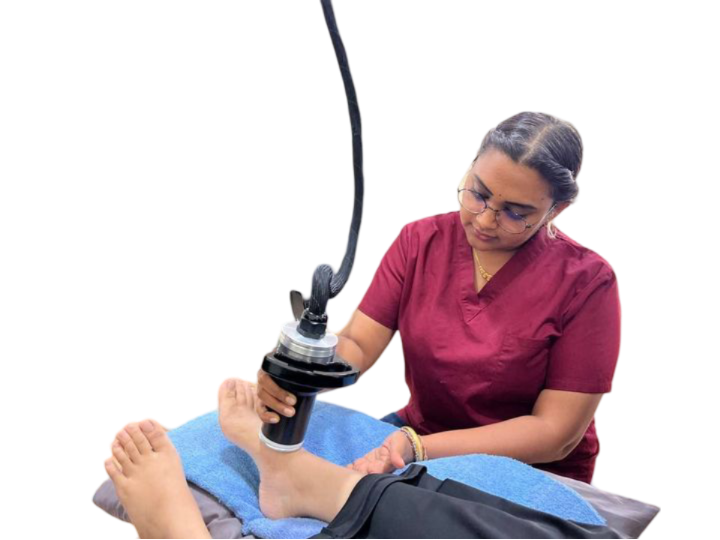
At Iswanah Physiotherapy, we provide comprehensive rehabilitation programs tailored to each patient’s needs.
Our treatment approach focuses on:
- Thorough assessment
- Evidence-based physiotherapy techniques
- Individualized exercise programs
- Pain management strategies
- Functional rehabilitation
- Injury prevention education
Whether your injury is recent or has become a chronic problem, our team is committed to helping you regain mobility, confidence, and quality of life.
We understand that every ankle sprain is unique, which is why we create personalized treatment plans designed to support your recovery goals.