Sciatica Symptoms: 9 Important Signs, Causes and Best Effective Treatment Options
Sciatica symptoms may include pain travelling from the lower back or buttock into the leg, making sitting, walking, sleeping and working difficult. Some people experience a dull ache, while others describe a sharp, burning or electric-shock sensation. Numbness, tingling or weakness may also develop when a nerve in the lower back becomes irritated or compressed.
Recognising sciatica symptoms is useful because not every episode of back or leg pain has the same cause. Mild cases may improve with time, appropriate activity and guided rehabilitation. However, new bladder or bowel problems, numbness around the saddle area or rapidly worsening weakness require emergency medical assessment.
This guide explains nine important sciatica symptoms, their common causes, assessment methods and available treatment options. Recognising these signs early may help you understand when discomfort could be related to irritation or compression of the sciatic nerve rather than ordinary muscle soreness.
You will also learn how physiotherapy may help manage pain, improve flexibility, rebuild strength and restore confidence in movement. A personalised rehabilitation programme can support a gradual return to sitting, walking, working, exercising and other daily activities while reducing the risk of aggravating your sciatica symptoms.
What Is Sciatica?
However, recovery varies depending on the underlying cause, severity of nerve involvement, general health and response to treatment. The information in this guide is provided for educational purposes only and should not replace an individual assessment, diagnosis or treatment plan from a qualified healthcare professional.
Sciatica is a term used to describe pain and other nerve-related sensations that follow the pathway of the sciatic nerve. The sciatic nerve is formed by several nerve roots in the lower spine before travelling through the buttock and down the back of the leg. It eventually divides into smaller branches that continue towards the lower leg, ankle and foot.
Common sciatica symptoms may include sharp or burning pain, tingling, numbness and weakness affecting the lower back, buttock, thigh, calf or foot. These symptoms often occur on one side of the body, although their location and intensity can vary depending on which nerve root is irritated or compressed. Some people experience continuous discomfort, while others notice pain only during particular movements or after sitting, standing or walking for a prolonged period.
Because sciatica symptoms can resemble those of other back, hip and nerve conditions, a proper assessment is important. A qualified healthcare professional can evaluate the pattern of symptoms, identify possible contributing factors and recommend an appropriate treatment or rehabilitation plan.

Sciatica is therefore a pattern of nerve-related symptoms rather than a disease by itself. It commonly develops when a nerve root in the lower spine becomes irritated, inflamed or compressed. Typical sciatica symptoms can include pain travelling from the lower back or buttock into the leg, accompanied by tingling, numbness or muscle weakness.
Sciatica is therefore a pattern of nerve-related symptoms rather than a disease by itself. It commonly develops when a nerve root in the lower spine becomes irritated, inflamed or compressed. Typical sciatica symptoms can include pain travelling from the lower back or buttock into the leg, accompanied by tingling, numbness or muscle weakness.
A spinal disc problem is one possible cause. When a disc bulges or herniates, it may irritate a nearby nerve root. Age-related changes in the spine, including narrowing of the spaces around the nerves, may also contribute to sciatica symptoms. However, changes identified through medical imaging do not always explain a person’s pain, so scan results should be considered alongside the medical history and physical assessment.
Less common causes may include trauma, inflammation or another condition affecting the spine and surrounding structures. The location, severity and duration of sciatica symptoms can vary depending on the nerve root involved and the degree of irritation. A professional assessment is therefore important to identify the likely cause, rule out serious conditions and determine an appropriate treatment or rehabilitation plan.
The pain often affects one side, although the precise location varies according to the nerve tissue involved. Some people have significant leg pain with little back pain, while others experience both. The NHS guide to sciatica notes that the main treatments may include exercises and stretches, pain relief and physiotherapy, depending on the individual situation.
9 Important Signs of Sciatica
1. Pain That Travels from the Lower Back or Buttock into One Leg
The most recognisable pattern is pain that begins around the lower back or buttock and travels down one leg. It may extend into the thigh, calf, ankle or foot. The sensation can follow a relatively narrow line rather than affecting the whole leg equally.
This travelling pattern helps distinguish sciatica from pain confined to a local muscle or joint. Nevertheless, referred pain from the spine, hip conditions and other nerve problems can produce similar discomfort. Location alone is not enough to confirm a diagnosis.
2. Burning, Shooting or Electric-Shock Pain
Nerve-related pain is often described as burning, shooting, stabbing or electric. A sudden jolt may occur when changing position, bending, coughing or sneezing. Other people experience a persistent deep ache with occasional sharp episodes.
Pain may increase after prolonged sitting or activity that places greater demand on the lower back. Persistent pain that limits normal function should be assessed.
3. Tingling or Pins and Needles in the Leg or Foot
Altered nerve signals may produce tingling, buzzing or pins-and-needles sensations. These feelings can affect the thigh, calf, sole, heel or toes. They may appear together with pain or become more noticeable when the pain begins to settle.
Persistent tingling should be discussed during an assessment. A clinician will examine whether the sensation follows a nerve-root pattern or suggests peripheral neuropathy or local nerve compression.
4. Numbness in Part of the Leg
Some individuals notice reduced sensation rather than tingling. The skin may feel thick, unusual or less responsive to touch. Numbness can occur over a small area or extend farther down the leg, depending on the nerve involved.
Protect numb areas from excessive heat. Seek prompt assessment if numbness spreads, becomes constant or occurs with increasing weakness.
5. Weakness in the Leg, Ankle or Foot

Nerve irritation may interfere with muscle control. You may find it difficult to climb stairs, rise onto your toes, lift the front of your foot or walk normally. The leg might feel unreliable even when the pain is manageable.
Rapidly worsening weakness, repeated falls or a new foot drop should be assessed urgently. A clinician may test muscle strength, reflexes and walking.
6. Pain That Worsens with Prolonged Sitting
Sitting can aggravate symptoms in some people, particularly when combined with slouching, driving or limited opportunities to change position. The discomfort may build gradually in the buttock and extend farther down the leg.
The issue may be duration, position or nerve sensitivity. Alternating between sitting, standing and short walks is often more practical than maintaining one “perfect” posture.
7. Symptoms Triggered by Coughing, Sneezing or Straining
Coughing, sneezing or straining briefly changes pressure around the spine. When a nerve root is already sensitive, this may reproduce or intensify pain down the leg. Clinicians may ask about this feature because it can support the overall diagnostic picture.
8. Difficulty Walking, Sleeping or Performing Daily Tasks
Symptoms may affect stride length, walking speed and confidence. Some people lean away from the painful side, avoid placing weight through the leg or struggle to find a comfortable sleeping position. Dressing, lifting, commuting and household activities can become tiring.
Functional limitation is important when evaluating sciatica symptoms. Treatment goals should address meaningful tasks—such as walking to work, caring for children or returning to sport—instead of focusing only on a pain score.
9. Symptoms That Change with Position or Movement
Pain may travel farther down the leg during certain movements and retreat towards the back during others. Clinicians sometimes describe movement of symptoms towards the spine as centralisation. This response can help guide exercise selection, although it does not occur in every case.
A physiotherapist can identify tolerable positions and develop a graded plan. Exercise direction and dosage should be tailored rather than copied from a generic online routine.
What Causes Sciatica?
Several conditions can irritate or compress nerve roots that contribute to the sciatic nerve. Common possibilities include:
- A lumbar disc bulge or herniation
- Age-related changes affecting spinal discs and joints
- Spinal stenosis, where space around the nerves becomes narrower
- Spondylolisthesis, where one vertebra shifts relative to another
- Inflammation or injury around the lower spine
- Less commonly, infection, fracture, tumour or another serious disorder
A disc problem does not automatically require surgery. Disc changes can exist without pain, so scans must be interpreted alongside the history and examination. Risk may also be influenced by sudden increases in lifting, repetitive bending, inactivity, smoking, general health and work demands.
When Sciatica Requires Emergency Care
Most cases are not medical emergencies, but certain combinations of sciatica symptoms require immediate assessment. Go to an emergency department or call emergency services if you develop:
- New difficulty starting or controlling urination
- Loss of bladder or bowel control
- Numbness around the genitals, buttocks or inner thighs
- Severe or rapidly worsening weakness in one or both legs
- Symptoms affecting both legs together with bladder, bowel or saddle changes
These features may indicate cauda equina syndrome, a rare but serious compression of the nerves at the lower end of the spinal cord. Treatment should not be delayed for massage, exercise or a routine physiotherapy appointment.
Seek prompt medical advice for back and leg pain accompanied by fever, unexplained weight loss, recent serious trauma, a history of cancer, significant immune suppression or pain that is severe and unrelenting. These features do not always mean a dangerous condition is present, but they require appropriate investigation.
When Sciatica Requires Emergency Care
Assessment begins with questions about the onset, location and behaviour of the symptoms. Your clinician may ask whether pain travels below the knee, whether numbness or weakness is present, what activities aggravate it and whether there are changes in bladder, bowel or sexual function.
The examination may include back and hip movement, leg strength, reflexes, sensation, walking and nerve-tension tests. No single home test can confirm every case.
Scans are not automatically required. Many presentations can be assessed through the history and physical examination. Imaging may be considered when serious pathology is suspected, neurological loss is progressing, surgery or an injection is being planned, or symptoms fail to improve as expected.
The US National Institute of Neurological Disorders and Stroke describes sciatica as shock-like or burning lower-back pain combined with pain through the buttock and down one leg in its low-back-pain information sheet. This pattern is helpful, but diagnosis should still account for other possible sources of leg pain.
How Physiotherapy May Help

Physiotherapy aims to help you understand the condition, stay safely active and rebuild the capacity required for daily life. An individual assessment is important because the same exercise may help one person but aggravate another.
Your physiotherapist can explain which activities are safe, which tasks need temporary modification and how to monitor changes. The aim is to create a realistic route back to movement.
You can learn more about Iswanah’s approach to pain and recovery through its overview of physiotherapy services.
Exercise may include gentle spinal movements, walking, mobility work, trunk conditioning and progressive leg strengthening. Selection depends on irritability, neurological findings, confidence and functional goals.
When sciatica symptoms are highly sensitive, the starting dose may be small. As tolerance improves, exercise can become more challenging and specific to work, lifting, sport or caregiving. Progress should be based on the overall response, including how symptoms behave later that day and the following morning.
Iswanah’s article on physiotherapy for sciatica provides additional information about common rehabilitation approaches. You also can direct contact Iswanah Physiotheray Shah Alam to get more information.
Joint mobilisation or soft-tissue techniques may temporarily improve comfort for selected patients. They are generally combined with education and active rehabilitation.
Short-term changes can reduce repeated irritation without encouraging complete inactivity. Options may include breaking sitting into shorter periods, alternating tasks, adjusting lifting technique or temporarily reducing demanding exercise.
Rehabilitation can restore confidence through achievable tasks. Progress may be measured by walking distance, sitting tolerance, sleep, lifting capacity and participation in normal routines.
For a broader explanation of movement-based care, see the guide to the benefits of physiotherapy.
Practical Steps at Home

If there are no emergency warning signs, the following strategies may support recovery:
- Keep moving within a tolerable range instead of staying in bed for long periods.
- Change position regularly during desk work, driving or travel.
- Use short, comfortable walks to maintain activity.
- Avoid repeatedly testing painful movements throughout the day.
- Break heavy or repetitive tasks into smaller stages.
- Follow exercises selected for your presentation and current capacity.
- Monitor whether pain is travelling farther down the leg or becoming more localised.
- Prioritise adequate sleep, hydration and general health habits.
- Discuss medication with a doctor or pharmacist, especially if you have other conditions.
Heat or cold may provide temporary comfort for sciatica symptoms, but always protect the skin and limit exposure. Avoid aggressive stretching that sharply increases leg pain, tingling or numbness. If exercise worsens your sciatica symptoms or causes new weakness, stop and seek professional advice.
Physiotherapy at Iswanah
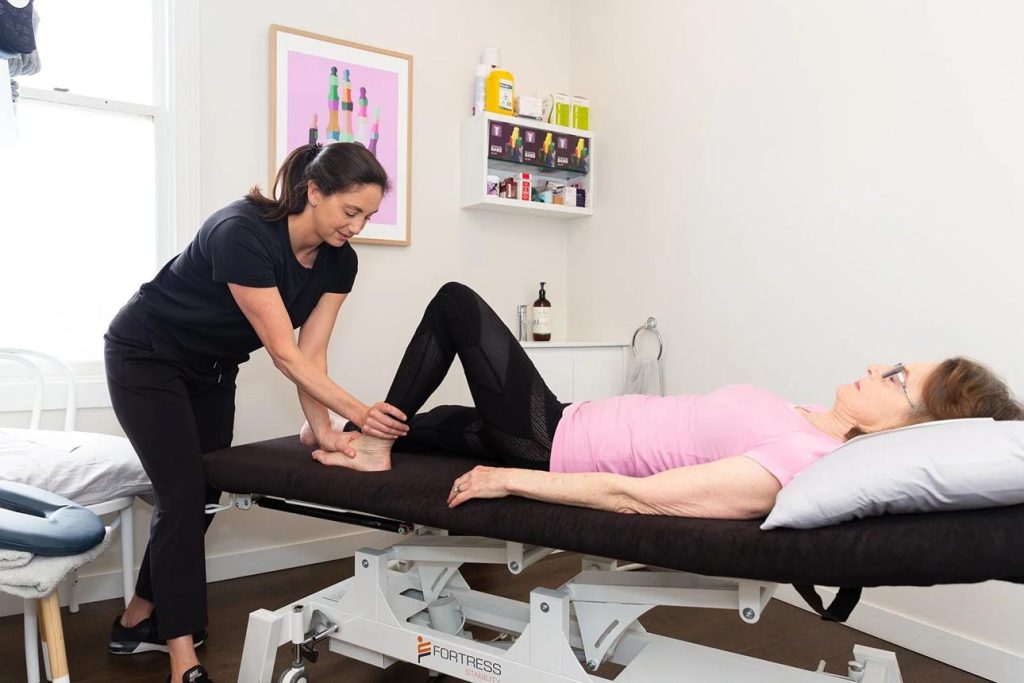
At Iswanah Physiotherapy Shah Alam, an assessment may include a detailed discussion of your sciatica symptoms, medical history, pain pattern and activities that aggravate or ease the discomfort. The physiotherapist may also assess spinal and hip movement, muscle strength, sensation, reflexes, walking ability and functional limitations. Your personal goals—such as returning to work, driving, exercising or sleeping more comfortably—can also guide the rehabilitation plan.
Based on the findings, treatment can be adjusted according to the suspected source of your symptoms, current physical ability and response over time. Care may include education about managing sciatica symptoms, individually selected exercises, movement retraining, manual techniques and suitable pain-management modalities. The aim is not simply to provide temporary comfort but to improve mobility, build physical capacity and help you return gradually to meaningful daily activities.
Treatment equipment and passive techniques may support symptom management, but they should complement an active rehabilitation programme. Patients may also receive guidance on pacing activities, changing positions, performing home exercises and recognising signs that require further medical assessment.
Those living nearby can review information about Iswanah Physiotherapy Shah Alam to learn more about the physiotherapy services available at each location. A professional assessment can help determine whether physiotherapy is appropriate for your condition and establish a personalised plan for managing sciatica symptoms safely.
Conclusion
Understanding sciatica symptoms helps you make safer decisions about activity, treatment and when to seek help. Pain travelling from the lower back or buttock into one leg, burning or electric sensations, tingling, numbness and weakness can all form part of the presentation. However, other conditions can create similar problems, so persistent or progressive symptoms deserve an individual assessment.
Most rehabilitation programmes for sciatica symptoms focus on patient education, tolerable movement, progressive exercise and a gradual return to meaningful daily activities. Education can help patients understand possible symptom triggers, adopt safer movement strategies and avoid unnecessary fear of physical activity.
A physiotherapist may introduce exercises to improve mobility, strengthen the muscles supporting the spine and hips, and increase tolerance for sitting, standing or walking. The programme should be adjusted according to the patient’s condition, functional goals and response to each activity. Exercise intensity is usually increased gradually rather than progressing too quickly and aggravating sciatica symptoms.
Passive treatments sciatica symptoms may provide temporary comfort, but long-term progress often requires active participation, consistent practice and an adaptable rehabilitation plan. Patients should monitor changes in pain, numbness, tingling and weakness, and inform their healthcare professional if symptoms worsen or new neurological signs develop.
If back and leg pain is affecting your mobility or daily routine, contact Iswanah Physiotherapy Shah Alam to enquire about an assessment. Seek emergency medical care immediately for bladder or bowel changes, numbness around the saddle region or rapidly increasing weakness.
Medical disclaimer: This article provides general educational information and does not replace diagnosis, treatment or emergency advice from a qualified healthcare professional.